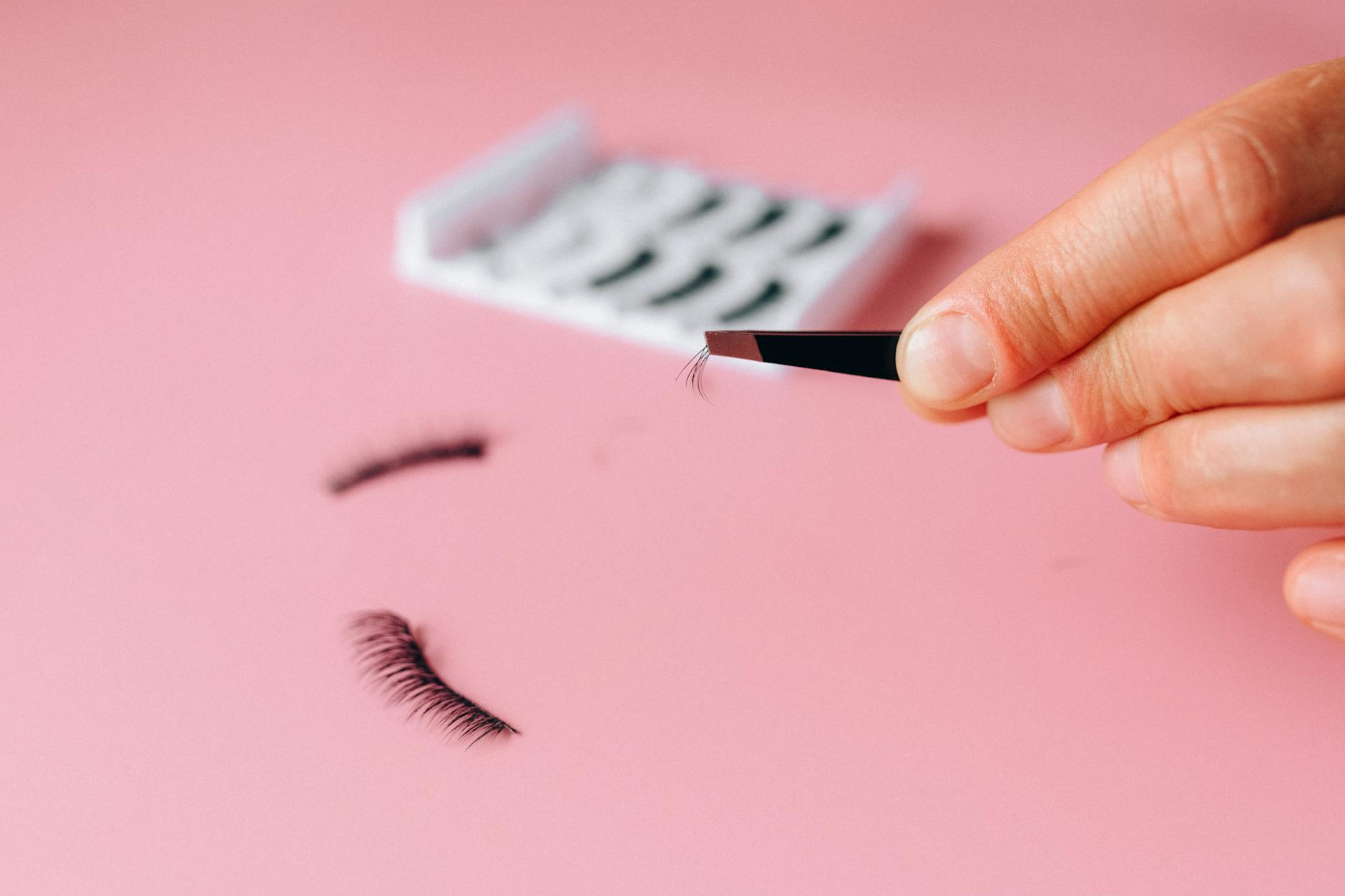
Eyelash extensions are a semi-permanent enhancement, each extension is bonded with a cyanoacrylate adhesive to an individual natural lash. When your natural lash completes its growth cycle and sheds, the extension goes with it. The extensions that drop off early are typically a care problem, not an application problem.
Understanding what breaks down the adhesive bond is the key to making extensions last.
The First 24–48 Hours: Critical Window
The adhesive used for lash extensions takes 24–48 hours to fully cure. During this period:
- Keep lashes completely dry, no showers, sweating, steam, or swimming
- Avoid touching or rubbing your eyes
- Do not use any eye makeup, the products will contact the bond before it’s set
- Sleep on your back, pressing extensions into a pillow before cure degrades the bond
Some technicians recommend a 24-hour window; others require 48. Follow your technician’s specific guidance. If in doubt, 48 hours is the safer standard.
Ongoing Care: What Breaks Down Extensions Early
Oil-Based Products
Cyanoacrylate adhesive dissolves when exposed to oil. Any oil-based product near the eye will progressively weaken the bond and cause early shedding. This includes:
- Oil-based cleansers and micellar waters with oil
- Oil-based eye makeup removers
- Eye creams and serums with high oil content (check for mineral oil, coconut oil, argan oil in the first five ingredients)
- Certain sunscreens near the eye
What to use instead:
- Foam cleansers or gentle gel cleansers, applied with downward pressure only, never rubbing at the lash line
- Oil-free micellar water on a lint-free pad
- Extension-specific lash shampoos (most technicians sell these)
Rubbing and Touching
Rubbing eyes, even lightly, from allergies or tiredness, catches and pulls extensions out of alignment or off entirely. If your eyes itch due to allergies, use antihistamine drops to manage the itch rather than rubbing.
Steam and Humidity
Regular steam (hot showers, saunas, steam rooms, cooking over a boiling pot) gradually weakens adhesive bonds. This doesn’t mean no showers, it means keeping your face out of direct steam and not letting the shower spray directly hit lash extensions. Occasional steam is fine; daily direct steam contact significantly shortens retention.
Sleeping Face-Down or Side-Sleeping
Pressing extensions into a pillow for 7–8 hours causes mechanical stress on the bond. A silk or satin pillowcase reduces friction compared to cotton, which helps. A lash extension sleep mask (a curved mask that doesn’t contact the lashes) is the most protective option.
Makeup That’s Safe With Lash Extensions
Eyeliner
Pencil and gel liner can be used on the upper lash line with extensions, apply above the lash line, not into the roots where adhesive is bonded. Liquid liner is also fine applied carefully to the skin of the lash line.
Avoid tight-lining (placing liner on the inner waterline mucous membrane) with extensions, as this increases migration of product into the lash root area.
Always use an oil-free eye makeup remover for cleanup.
Eyeshadow
Powder eyeshadow is generally extension-safe. Use a soft brush and tap off excess before applying anywhere near the lash line, as powder fallout that settles at the lash root is harder to remove without disturbing the extensions.
Mascara
If you use mascara with extensions:
- Use an extension-safe, water-based formula only
- Apply from mid-shaft to tip only, the root is where adhesive is bonded
- Never use waterproof mascara, oil-based mascara, or fibre mascara
- Remove with oil-free micellar water, not an oil-based remover
Most technicians recommend skipping mascara entirely with extensions, as the volume and length typically make it unnecessary.
Brushing Extensions
Gently comb through your extensions once a day with a clean spoolie brush. Do this after washing, when lashes are dry. Brush from mid-shaft to tip only, not from the root. This keeps extensions fluffed, separated, and aligned.
When Extensions Should Be Removed
Extensions shed naturally as natural lashes cycle. When you’re down to patchy coverage and it looks uneven, it’s time for a fill (replacing shed extensions) or a full removal.
Never pull or pick extensions off. Forcibly removing an extension that’s still bonded to a natural lash will pull the natural lash with it, causing temporary patch loss at that follicle. A trained lash technician uses a specific removal solution to break down the adhesive safely.
Natural Lash Health After Extensions
If you’ve been wearing extensions continuously for months, give your natural lashes a break between sets. Use a lash serum containing bimatoprost-adjacent peptides (such as Nulastin, LiLa Lash, or Revitalash) to support lash growth and strength between sets. Most lash technicians recommend at minimum one break every 6–12 months.
Choosing the Right Product for Your Needs
When exploring eye makeup, selecting the perfect product relies heavily on understanding your skin type, undertones, and daily routine. To achieve the most flattering look, always prioritize formulas that work with your unique biology rather than against it.
Understanding Skin Types and Formulas
If you have oily eyelids, powder eyeshadows and waterproof liquid liners will be your best defense against midday creasing and smudging. For those with mature or dry skin, cream shadows and hydrating concealers offer a youthful, radiant finish that won’t settle into fine lines. Always start with a high-quality eye primer to ensure whatever formula you choose locks in place for 12+ hours. Also, applying setting powder lightly over the lids before packing on color can absorb excess sebum throughout the day, significantly extending the life of your look.
The Role of Undertones
Matching your makeup to your undertone is crucial. If you have cool undertones (veins appear blue/purple), reach for icy silvers, cool taupes, and berry hues. If your undertones are warm (veins appear green), gold, peach, bronze, and warm terracotta shades will make your eyes pop. Neutral undertones have the flexibility to wear almost any shade on the color wheel. Remember that contrasting colors on the color wheel create the most dramatic impact; for example, warm copper tones will make blue eyes appear vividly bright, while violet hues beautifully enhance green eyes or hazel eyes.
Proper Removal and Eye Health
The most important step of any makeup routine is removing it. Sleeping in eye makeup can lead to clogged hair follicles, lash loss, and severe eye infections like styes. Use a dedicated, gentle bi-phase makeup remover on a cotton pad, holding it over the closed eye for 10 seconds to dissolve waterproof bonds before gently wiping away. Never violently scrub the delicate skin around the eyes, as this accelerates premature aging and wrinkle formation. After removal, applying a hydrating, peptide-rich eye cream will restore the moisture barrier stripped away by cleansing surfactants, promoting healthy lash growth and a smoother canvas for the next day’s application.
Sources
- American Academy of Ophthalmology. (2025). “Eyelash Extensions: What to Know.” aao.org.
- Draelos, Z.D. (2022). “Eyelash Cosmetics and Safety.” Clinics in Dermatology, 40(2), 206–211.
- Journal of Clinical and Aesthetic Dermatology. (2023). “Complications of Semi-Permanent Eyelash Extensions.” Springer.
Related Guides
- How to Remove Eye Makeup Without Damage
- Statement Lashes & White Mascara: The 2026 Trend
- Best Mascaras of 2026: Tested Picks
- Swollen Eyes from Allergies: Causes and Treatment
Get weekly eye care & beauty tips
Guides from the Eyeshadow Looks Beauty Desk. No spam, ever.
Frequently Asked Questions
How long do lash extensions last?
Lash extensions are attached to your natural lashes, which naturally shed every 60–90 days. The extension falls off when the natural lash it's attached to sheds. With proper care, most people retain their extensions for 4–6 weeks before needing a fill. Poor aftercare, oil-based products, rubbing, steam, or sleeping face-down, can shorten this to 2–3 weeks.
Can you wear mascara with lash extensions?
You generally don't need mascara with extensions, and most lash technicians advise against it. If you do use mascara, use a water-based, extension-safe formula from the mid-shaft to tip only, never from the root, where adhesive is bonded. Never use waterproof mascara or an oil-based formula, as both degrade the adhesive.
Do lash extensions damage your natural lashes?
Applied correctly by a certified technician, extensions attached to lashes of appropriate length and weight should not cause damage. Problems occur when extensions are too heavy for the natural lash (pulling the follicle), when application is too close to the lid skin, or when removal is not done by a professional. Picking or pulling extensions off causes the most damage to natural lashes.