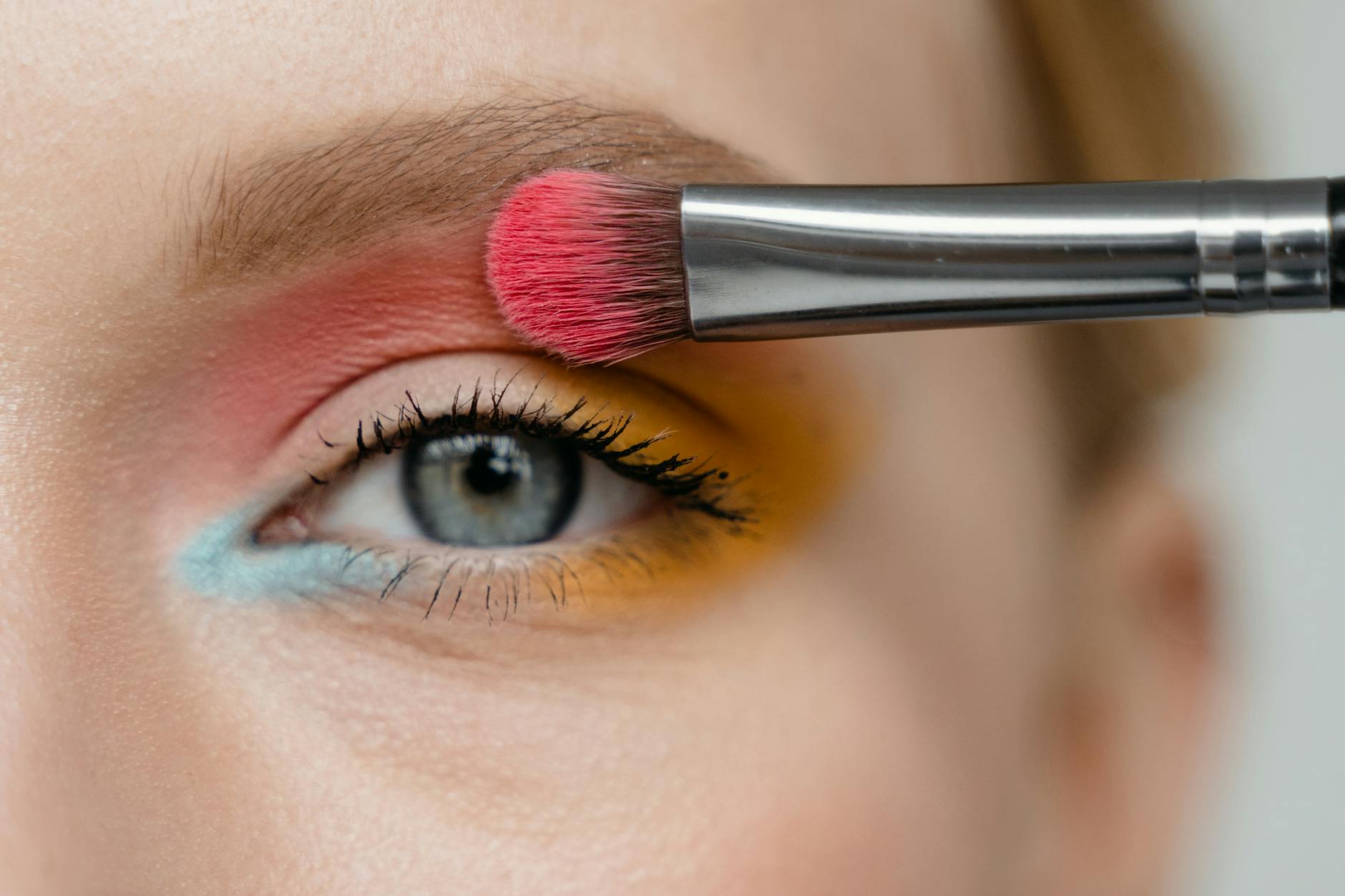
The relationship between eyeshadow and eyeliner is more mechanical than it might seem. Colors have predictable interactions, some create contrast, some create harmony, some simply clash. Understanding the basic rules gives you a framework to create pairings confidently, whether you’re reaching for a classic look or trying something bold.
The Three Color Relationships That Drive Eye Makeup
1. Matching (Same Color Family)
Liner in the same color family as the shadow. Creates a cohesive, monochromatic look where the eye reads as a unified color statement.
Example: Dusty rose shadow with a burgundy liner. The liner deepens and defines without introducing a new color.
Works best for: Soft, polished everyday looks. Monochromatic beauty trends.
2. Contrasting (Opposite Color Wheel)
Liner in a color that sits opposite the shadow on the color wheel. Creates visual energy and makes both colors pop simultaneously.
Example: Warm copper shadow with a teal or forest green liner. The orange and green components contrast sharply.
Works best for: Bold, editorial looks. Statement eyes. Occasions where you want the eye makeup to read across a room.
3. Neutral + Pop (Neutral Shadow, Colored Liner)
Using a neutral taupe, beige, or cream shadow as a clean base, then applying a single bold colored liner. The neutral reads as a natural enhancement; the liner does all the work.
Works best for: Color-curious beginners. People who want the impact of color without committing to a full colored lid.
Classic Pairings That Consistently Work
Black Liner + Any Neutral Shadow
The most universal combination in eye makeup. Matte black liner (pencil, gel, or liquid) adds definition and drama to virtually any shadow shade in the nude/taupe/brown range.
The formula:
- Lid: warm taupe, champagne, or soft brown
- Crease: medium brown or mauve
- Liner: matte black on the upper lashline
- Result: clean, professional, universally flattering
Brown Liner + Warm Earth Tones
A softer alternative to black that reads as more polished on fair skin or in natural light.
The formula:
- Lid: terracotta, peach, or rose-brown
- Crease: medium brown
- Liner: dark chocolate brown on upper lash line, optional smudge under lower lashes
- Result: warm and polished; suits fair to medium skin especially well
Navy Liner + Warm Copper or Bronze Shadow
One of the most universally flattering combos across skin tones of all types. The warmth of copper and the cool precision of navy create a contrast that makes both colors more vivid.
The formula:
- Lid: warm copper or antique bronze (shimmer)
- Crease: matte burnt brown or terracotta
- Liner: navy gel or liquid liner, upper lash line
- Result: improved, modern, works on every eye color
Forest Green Liner + Rose Gold or Peach Shadow
Green and pink-orange are complementary on the color wheel. Forest green liner against a warm rose or peach shadow creates a pairing that feels unexpected but cohesive.
The formula:
- Lid: rose gold shimmer or warm peachy-pink
- Crease: dusty mauve or soft brownish-pink
- Liner: forest or olive green on upper lash line
- Result: unexpected and eye-catching without being harsh
Plum Liner + Champagne or Warm Beige Shadow
A classic soft glam combination. The champagne shadow is almost invisible, which means the plum liner reads as a color accent against clean skin rather than a full eye look.
The formula:
- Lid: champagne or warm cream shimmer
- Light under-brow highlight
- Liner: plum pencil or gel, smudged on upper and lightly on lower lash line
- Result: soft, feminine, flattering on every eye color; great for dates or evenings
White or Nude Liner + Bold Colored Shadow
Placing a white or nude liner on the inner waterline opens the eye dramatically. Paired with a bold-colored shadow on the outer portion of the lid, it creates a modern contrast look.
The formula:
- Lid outer half: deep burgundy, forest green, or cobalt
- Lid inner half: lighter transition shade or nude
- Waterline: white or nude liner
- Result: graphic, modern, eye-opening
Combos by Eye Color
| Eye Color | Shadow | Liner |
|---|---|---|
| Brown | Warm copper or purple | Navy, dark plum |
| Hazel | Champagne or rose gold | Forest green, plum |
| Blue | Warm terracotta or mauve | Brown or warm gold |
| Green | Rose gold or warm peach | Burgundy or forest green (slightly deeper than iris) |
| Dark brown | Any bold color | Black, navy, or matching deep tone |
What to Avoid
Liner that exactly matches the shadow on the lid creates a flat, single-dimension look. Even with monochromatic pairings, the liner should be a shade or two darker than the lid color to provide definition.
Cool grey liner with warm shadows creates a muddy disconnect, gray is very cool-toned and reads as dirty next to warm browns, terracottas, or corals.
Using a liner color that competes with lip color, if you’re wearing a bright or bold lip, keep liner dark and simple (black or brown) to balance the face. Save the colored liner for looks with neutral lips.
Sources
- Itten, J. (2001). The Art of Color. Wiley.
- Itten, Johannes. The Art of Color. Reinhold Publishing, 1961, color harmony and analogous combination principles
- Eldridge, Lisa. Face Paint: The Story of Makeup. Abrams, 2015, color coordination in eye makeup
Related Guides
- Eyeliner Tutorial: Every Technique for Every Eye Shape
- Best Eyeliners of 2026: Every Type Tested
- Best Eyeshadow Colors for Brown Eyes
- Best Eyeshadow Colors for Hazel Eyes
- Best Eyeshadow Colors for Blue & Green Eyes
Advanced Combination Principles
Analogous combinations: Combining liner and shadow that sit adjacent to each other on the color wheel (e.g., forest green liner with emerald shadow, or navy liner with cobalt shadow) creates sophisticated, cohesive looks that read as more high-fashion than simple matching.
Tonal graduation: Using the same hue in different intensities, a pale lavender lid shadow with a deep violet liner, creates depth without requiring color theory knowledge, because the pairing is always harmonious.
Metallic liner with matte shadow: A metallic liner in a warm or cool tone combined with a matte shadow in the same tonal family is a reliable combination. The contrast in finish adds interest without requiring complicated color combination decisions.
Sources
- The Complete Book of Makeup, Kirsten Lauryn (2016)
- Lisa Eldridge, Online makeup academy notes on color theory application
- Color coordination theory: Itten, Johannes (The Art of Color, 1961, adapted for cosmetics contexts)
We evaluate beauty products and techniques independently. To learn more about our editorial standards, read our Editorial Policy.
Get weekly eye care & beauty tips
Guides from the Eyeshadow Looks Beauty Desk. No spam, ever.
Frequently Asked Questions
What eyeliner color goes with a brown eyeshadow look?
Brown eyeshadow pairs best with dark brown, plum, or forest green eyeliner for a warm, earth-tone look. Matte black adds sophistication. Bronze or copper liner adds metallic depth. Avoid cool-toned grey liners with warm brown shadows, they create a muddy disconnect.
Can I mix colored eyeliner with neutral shadows?
Yes, this is one of the most effective combinations. A bold colored liner (cobalt, emerald, plum) applied to the upper lash line over neutral taupe or beige shadow creates impact without overwhelming the face. The neutral shadow provides a clean base that makes the liner color pop more vividly.
What eyeliner goes with pink eyeshadow?
Soft pink shadow works well with warm brown, plum, rose gold, or burgundy liner. Black liner can work but creates a stark contrast, if you want to soften it, use brown liner instead. Navy liner is a surprisingly flattering match for dusty rose shades, creating a cool-toned counterpoint.