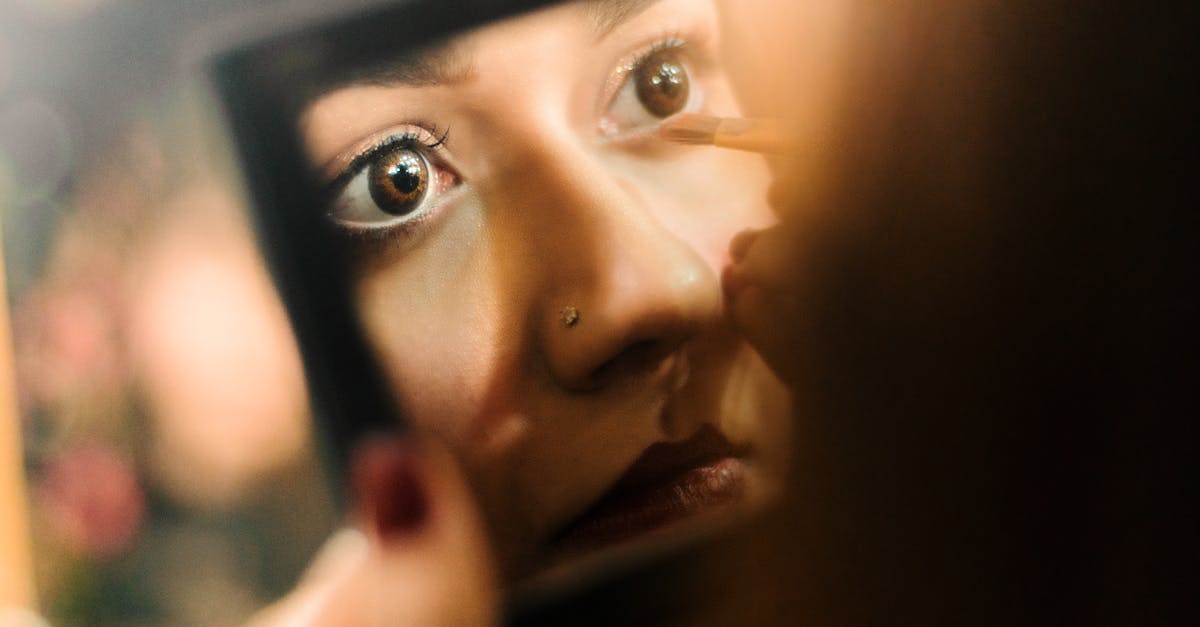
Everyone wants bigger-looking eyes. It’s the #1 goal behind most eyeshadow looks, and the reason the beauty industry sells millions of “volumizing” mascaras every year.
But most big-eyes tutorials only work for one eye shape, usually the wide-set, large-lid Western eye that doesn’t actually need help looking bigger. If you have hooded eyes, monolids, or deep-set eyes, those generic techniques can actually make your eyes look smaller.
These 8 techniques are tested on every major eye shape. I’ve noted which ones work best for specific shapes so you can skip straight to what matters for you.
1. White or Nude Liner on the Waterline
Works best for: All eye shapes Difficulty: Beginner
This is the single most effective big-eyes technique, and the one most people don’t know about.
How it works: Your lower waterline (the wet inner rim of your lower lid) is naturally pink or reddish. When you line it with a white or nude pencil, it visually extends the white of your eye, creating the illusion of a larger eye opening.
How to do it:
- Pull your lower lid down gently.
- Apply a creamy white or nude eyeliner pencil directly to the waterline (the wet inner rim, not the lash line).
- Blink a few times to set it.
Product to use: NYX Jumbo Eye Pencil in “Milk” ($5) or Charlotte Tilbury Rock ‘n’ Kohl in “Barbarella Brown” for a more subtle nude.
Tip: White pencil is more dramatic (best for photos and evening). Nude/beige pencil is more natural for everyday.
2. Curl Your Lashes Before Mascara
Works best for: Straight lashes, East Asian eye shapes, monolids Difficulty: Beginner
Uncurled lashes point downward, which visually closes the eye. Curled lashes lift upward, exposing more of the iris and creating the appearance of a larger, more open eye.
How to do it:
- Open your eyelash curler. Place your upper lashes between the pads, as close to the lash line as possible without pinching skin.
- Squeeze gently for 10 seconds.
- Release, then move the curler to the middle of your lashes. Squeeze again for 5 seconds.
- Apply mascara immediately after curling (before the curl drops).
Pro tip: Heat your eyelash curler with a hair dryer for 5 seconds before using it. The warmth helps set the curl like a curling iron does for hair. Test the temperature on the back of your hand first, it should be warm, not hot.
3. Apply Light Shimmer to the Inner Corner
Works best for: Close-set eyes, deep-set eyes, all shapes Difficulty: Beginner
Placing a light, shimmery shadow on the inner corner (tear duct area) of the eye catches light and draws attention outward, making the eye appear wider.
How to do it:
- Use your ring finger or a small flat brush.
- Pat a champagne or light gold shimmer shadow onto the inner corner of both eyes.
- Blend slightly up toward the brow bone and slightly outward along the lower lash line.
This technique works as a standalone for everyday makeup, you don’t need a full eyeshadow look for it to make a visible difference.
4. Tight-Line Your Upper Lash Line
Works best for: Hooded eyes, deep-set eyes Difficulty: Intermediate
Tight-lining means applying eyeliner between your upper lashes rather than on top of your lid. This darkens the lash line without creating a visible liner stripe that takes up precious lid space (critical for hooded eyes).
How to do it:
- Use a waterproof pencil liner or a thin felt-tip pen liner.
- Lift your upper eyelid with your non-dominant hand.
- Carefully dot liner between each lash, filling the gaps. Work from the outer corner inward.
- The result should look like your lashes are naturally thicker at the root, no visible line.
Why this works for hooded eyes: Traditional eyeliner on the lid gets hidden in the fold, wasting product and creating a messy look when the eye opens. Tight-lining is invisible when the eye is open but creates definition when you blink or look down.
5. Extend Eyeshadow Above the Crease (Hooded Eyes)
Works best for: Hooded eyes specifically Difficulty: Intermediate
If you have hooded eyes, your crease fold covers your mobile lid when your eyes are open. Standard eyeshadow placement disappears. The fix: apply your transition/crease shade above your actual crease.
How to do it:
- Look straight into a mirror with your eyes open.
- Note where your crease fold falls.
- Apply your transition shade above that fold, so it’s visible when your eyes are open.
- Blend upward, not sideways.
6. Use Lengthening Mascara on Lower Lashes
Works best for: Small eyes, round eyes, monolids Difficulty: Beginner
Most people only mascara their upper lashes. Adding a light coat of lengthening mascara to your lower lashes opens up the entire lower portion of your eye.
How to do it:
- Use a thin-wand mascara (not your volumizing mascara, that clumps lower lashes).
- Hold the wand vertically and wiggle it gently across your lower lashes.
- One coat only. Two coats on lower lashes creates spider legs.
Product to use: Maybelline Lash Sensational in the waterproof formula, the thin wand is perfect for lower lashes.
7. Highlight Under the Brow Bone
Works best for: Deep-set eyes, all shapes Difficulty: Beginner
A matte or satin highlight shade applied directly under the brow arch creates a lifting effect that makes the brow-to-eye distance appear greater, which reads as “bigger eyes.”
How to do it:
- Use a matte vanilla or ivory shadow (avoid glitter, matte is more natural).
- Apply just under the highest point of your brow arch.
- Blend downward toward the crease.
This is the subtlest technique on this list, but it makes a real difference in photos.
8. Winged Liner That Lifts (Not Extends)
Works best for: Downturned eyes, almond eyes Difficulty: Advanced
The standard cat-eye wing can actually make small eyes look smaller if the angle is wrong. The key: angle the wing toward the end of your eyebrow, not straight out.
How to do it:
- Look straight ahead in the mirror.
- Place a small dot where you want the wing to end, imagine a line from the outer corner of your eye to the tail of your eyebrow.
- Draw the wing from that dot back toward your lash line.
- Fill in the triangle.
Angle matters: A wing that goes straight out or downward makes the eye droop. A wing angled upward toward the brow tail lifts the eye.
The Complete Big-Eyes Routine (5 Minutes)
If you want to combine the most impactful techniques into one quick routine:
- Curl lashes (30 seconds)
- Tight-line upper lashes with dark brown pencil (60 seconds)
- White/nude on lower waterline (30 seconds)
- Champagne shimmer on inner corners (30 seconds)
- Lengthening mascara, upper and lower lashes (60 seconds)
- Brow bone highlight (30 seconds)
Total: 4 minutes. This combination makes a dramatic difference without requiring any blending skill or multiple eyeshadow shades.
Techniques by Eye Shape
| Eye Shape | Best Techniques | Avoid |
|---|---|---|
| Hooded | Tight-line (#4), Above-crease shadow (#5), Waterline liner (#1) | Heavy liner on the lid (it disappears) |
| Monolid | Lash curl (#2), Lower lash mascara (#6), Inner corner highlight (#3) | Dark smoky lower lash line (closes the eye) |
| Deep-set | Inner corner highlight (#3), Brow highlight (#7), Light lid colors | Very dark crease shadow (deepens the socket) |
| Round | Winged liner (#8), Lower lash mascara (#6) | Lining the entire eye (makes it look smaller) |
| Downturned | Upward wing (#8), Outer corner shadow lifting | Lining the lower outer corner downward |
| Close-set | Inner corner highlight (#3), Wing extended outward | Dark inner corner shadow |
Related Tutorials
- Are Dark Circles Under Eyes a Sign of Illness?
- Best Eyeshadow for Beginners: The Only 3 Palettes You Need
Sources
- American Academy of Ophthalmology, Eye Health Information
- American Academy of Dermatology, Skin Care Guidelines
- National Eye Institute, Eye Health Research
Get weekly eye care & beauty tips
Guides from the Eyeshadow Looks Beauty Desk. No spam, ever.